


Back to
All Posts
Archives- July 2026
- June 2026
- May 2026
- April 2026
- March 2026
- April 2025
- December 2024
- September 2024
- June 2024
- April 2024
- March 2024
- December 2023
- September 2023
- June 2023
- March 2023
- November 2022
- October 2022
- July 2022
- June 2022
- May 2022
- December 2021
- November 2021
- October 2021
- August 2021
- May 2021
- April 2021
- February 2021
- January 2021
- November 2020
- September 2020
- August 2020
- July 2020
- April 2020
- February 2020
- January 2020
- December 2019
- November 2019
- October 2019
- September 2019
- August 2019
- July 2019
- June 2019
- April 2019

European Travel || What you Need to Know.
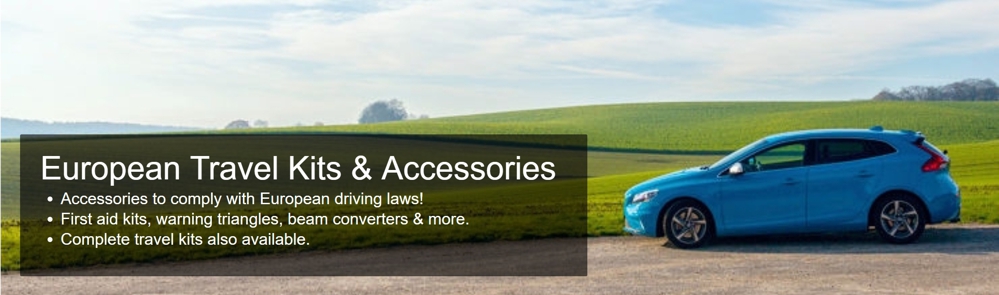
As summer holidays and work trips abroad approach, it's essential to prepare for driving across Europe. Familiarise yourself with the rules and regulations to avoid hefty fines or points on your licence. If you're planning a trip or working abroad, here's a handy checklist of essentials.
Things you will need (everything below can be found in our new European Travel Section)
A GB sticker must be displayed on your vehicle. Failure to do so could result in a fine.
Reflective jackets are required for all passengers, including the driver. These must be worn if you leave your vehicle during a breakdown or emergency. If hiring a car, check if these are included.
To avoid dazzling oncoming drivers, you must adjust your headlamps for driving on the right. Use headlamp converters, available here.
Warning triangles are mandatory in most countries and should be used during emergencies or breakdowns.
First Aid Kits are required when driving in Austria, France, and Germany.
Carrying a breathalyser is essential when driving in France, where it is compulsory.
It's advisable to carry a universal bulb kit for emergencies.
We also offer full travel kits that fit compactly in your boot or van. To view our complete selection, click here.

EU Rules
You must hold a full, valid licence and national insurance number, and carry your licence at all times. Ensure you have proof of vehicle insurance, proof of ID, travel insurance documents, and European breakdown cover. It's also wise to check that your vehicle tax and MOT are current.
If you're working or driving abroad, remember that you cannot drive for more than 9 hours in a day (10 hours twice a week), 56 hours in a week, and no more than 90 hours in any two consecutive weeks. For full rules on resting between driving abroad, visit .gov for all the information you need.