


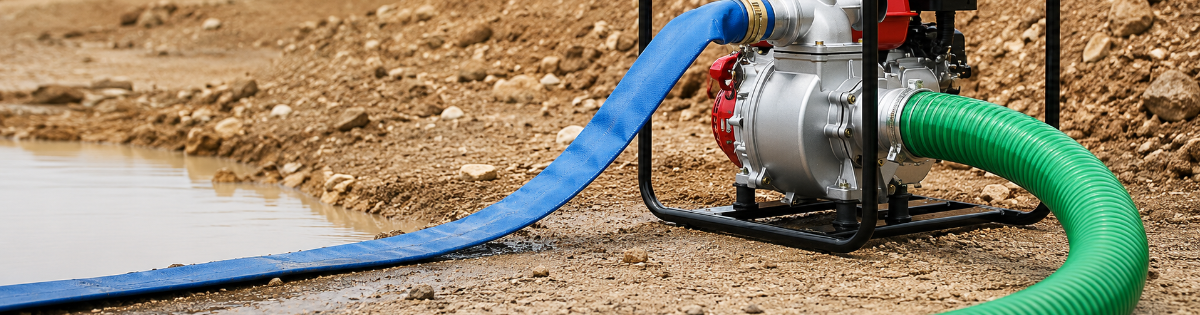
How to Set Up a Water Pump Hose System
A water pump hose system needs the correct components on both sides of the pump. The inlet must remain rigid and airtight so the pump can draw water, while the outlet needs a suitable delivery hose to carry water away safely and efficiently.
Quick rule: use reinforced suction hose on the pump inlet and layflat delivery hose on the discharge outlet. Layflat hose should not be used on the suction side because it can collapse under vacuum.
The Basic Water Pump Hose Setup
Water Source → Strainer → Suction Hose → Pump → Outlet Coupling → Layflat Delivery Hose
Each component has a different job. Choosing the correct size and making secure, airtight connections will help the pump prime correctly, maintain flow and reduce the risk of leaks or blockages.
What Parts Do I Need?
| Component | Purpose | What to Check | Useful Link |
|---|---|---|---|
| Hose Strainer | Stops stones, leaves and larger debris entering the suction hose and pump. | Match the connection size to the suction hose and keep the strainer clear during use. | Hose Strainers |
| Reinforced Suction Hose | Draws water from the source into the pump without collapsing under vacuum. | Match the hose inside diameter to the pump inlet and use a hose rated for suction. | Suction Hose |
| Pump Couplings and Fittings | Connect the suction and delivery hoses to the pump inlet and outlet. | Check pump port size, hose size, thread type and whether a hose tail or quick coupling is required. | Pump Couplings & Fittings |
| Layflat Delivery Hose | Carries discharged water away from the pump and stores flat when not in use. | Match the hose size to the pump outlet and check its working-pressure rating and required length. | Layflat Delivery Hose |
| Sediment Filter Bag | Filters sediment from discharged water before it reaches a drain, watercourse or work area. | Choose a suitable size for the outlet hose and the expected flow and sediment load. | Strainers & Filter Bags |
How to Set Up the Suction Side
- Match the hose size to the pump inlet. Avoid reducing the inlet size unless the pump manufacturer specifically permits it, as a restricted inlet can reduce performance and make priming more difficult.
- Fit a suitable strainer. Position it below the water surface but clear of mud, silt and the bottom of the water source.
- Connect reinforced suction hose. Use the correct pump coupling, hose tail and clamp for the hose size.
- Make every connection airtight. Even a small air leak can prevent the pump from priming or cause intermittent loss of flow.
- Keep the hose run short and direct. Avoid unnecessary bends, high points and sharp kinks where air can become trapped.
Important: the suction side must be airtight, not merely watertight. A connection may show no visible water leak but still draw enough air to stop the pump priming properly.
How to Set Up the Delivery Side
- Match the layflat hose to the pump outlet. Common systems use 2", 3" or 4" hose, but the correct size is determined by the pump outlet and required flow.
- Check the hose pressure rating. The hose must be suitable for the maximum pressure the pump can produce in the intended setup.
- Use the shortest practical hose run. Longer runs and smaller hose diameters create greater resistance and can reduce the delivered flow.
- Lay the hose out before starting the pump. Remove twists, sharp bends and trapped sections that could restrict flow.
- Secure the discharge end. A delivery hose can move suddenly when pressure builds, particularly when it first fills with water.
- Add a sediment filter bag where required. Fit it to the discharge end when water needs to be filtered before release.
Choosing the Right Hose Size
The correct hose size is primarily determined by the pump inlet and outlet connections. Using hose that is too small can restrict flow, increase friction loss and make priming more difficult. Larger hose can support higher flow, but it is heavier and requires compatible fittings.
| Hose Size | Typical Use | Main Consideration |
|---|---|---|
| 1" to 1½" | Small transfer pumps, garden irrigation and light drainage. | Easy to handle, but generally suited to lower-flow applications. |
| 2" | General drainage, site water removal and routine water transfer. | Common, manageable and suitable for many portable pumps. |
| 3" | Larger pumps, dirty-water transfer and heavier dewatering work. | Higher flow with a good balance of capacity and handling. |
| 4" | High-volume drainage, flood water movement and large pumping equipment. | Greater flow capacity, but heavier and bulkier. |
The hose should normally match the pump connection size. Increasing the delivery hose diameter may reduce resistance on a long run, but fittings and the complete system still need to be compatible with the pump.
How to Prime the Pump
Priming fills the pump casing and suction line with water so the pump can begin drawing from the source. Follow the pump manufacturer’s priming procedure, as the exact method varies between pump designs.
- Check that the strainer is submerged and not blocked
- Fill the pump casing as instructed by the manufacturer
- Check that all suction-side fittings are tight and sealed
- Keep the suction hose free from high points that can trap air
- Do not allow a pump that requires priming to run dry
Why Is My Water Pump Not Drawing Water?
| Problem | Likely Cause | What to Check |
|---|---|---|
| Pump will not prime | Air leak, empty pump casing or suction hose not fully submerged | Reseal inlet connections, repeat the priming procedure and check the water level. |
| Flow starts and then stops | Strainer blockage, air entering the suction line or water level falling | Clean the strainer, inspect joints and reposition the inlet if necessary. |
| Low water flow | Hose too small, excessively long hose run, blocked strainer or excessive suction lift | Check the whole system against the pump specification and shorten or enlarge the hose run where appropriate. |
| Suction hose flattens | Delivery hose or non-reinforced hose used on the inlet | Replace it with reinforced suction hose of the correct diameter. |
| Delivery hose moves or twists | Hose not laid out or secured before pressure builds | Stop the pump safely, depressurise the system and reposition the hose before restarting. |
Common Setup Mistakes
- Using layflat hose on the suction side
- Reducing the pump inlet with smaller hose
- Leaving suction-side connections loose or poorly sealed
- Allowing the strainer to sit directly in mud or sediment
- Running excessively long delivery hose without considering pressure loss
- Starting the pump before the delivery hose has been laid out safely
- Running a pump dry when it requires water for cooling or lubrication
- Disconnecting a hose before the system has been stopped and depressurised
Quick Setup Checklist
- Pump inlet and suction hose are the same size
- Suction hose is reinforced and rated for vacuum service
- Strainer is fitted, submerged and clear of the bottom
- All suction-side connections are airtight
- Pump has been primed according to its instructions
- Delivery hose matches the outlet and pressure requirement
- Layflat hose is fully unrolled without sharp bends
- Discharge end is secure and directed to a suitable location
- Sediment filter bag is fitted where required
Quick Q&A
Can I use layflat hose on both sides of the pump?
No. Layflat hose is intended for the discharge side. Use reinforced suction hose on the inlet because it must resist collapsing when the pump creates a vacuum.
Should the hose size match the pump connection?
Yes, this is normally the best starting point. Reducing the suction inlet can restrict flow and make priming more difficult. Always check the pump manufacturer’s requirements.
Do I need a strainer on the suction hose?
Use a strainer when pumping from ponds, excavations, tanks, drains or other sources where debris could enter the hose and damage or block the pump.
Why does a pump lose prime?
Common causes include air leaks at suction fittings, a blocked or exposed strainer, trapped air in the hose, excessive suction lift or an incorrectly primed pump.
Does a longer layflat hose reduce flow?
It can. Friction increases with hose length, and smaller-diameter hose creates more resistance. The effect depends on the pump, hose diameter, flow rate and total system layout.
Where does a sediment filter bag go?
It is normally fitted to the discharge end of the delivery hose so sediment can be captured before the pumped water is released.
Safety: stop the pump and release pressure before adjusting, removing or reconnecting hoses. Follow the pump manufacturer’s operating and priming instructions, and do not exceed the rated pressure of any hose, coupling or accessory.