

Trailer Tyre Speed Ratings & Load Index Explained
Trailer Tyre Speed Ratings & Load Index Explained
A replacement trailer tyre can be the correct diameter and width but still be wrong for the trailer.
The Load Index (LI) tells you the load the tyre is rated to carry. The speed symbol identifies its speed category. Both need checking alongside the tyre size when replacing trailer tyres or complete wheel assemblies.
What Does 195/55R10 98N Mean on a Trailer Tyre?
A marking such as 195/55R10 98N can be broken down like this:
| Marking | Meaning |
|---|---|
| 195 | Nominal tyre section width in millimetres. |
| 55 | Aspect ratio. The nominal sidewall height is 55% of the tyre section width. |
| R | Radial tyre construction. |
| 10 | Wheel rim diameter in inches. |
| 98 | Load Index (LI). Index 98 corresponds to 750kg per tyre in single fitment. |
| N | Speed symbol. N corresponds to 140km/h, approximately 87mph. |
The final part, 98N, is the tyre's service description. It combines the Load Index (LI) and speed symbol.
Trailer tyre markings can vary between manufacturers and tyre types, so other information may appear alongside these figures.
What Is a Trailer Tyre Load Index (LI)?
The Load Index (LI) is a numerical code that corresponds to the maximum load a tyre is rated to carry. The figure applies per tyre and does not automatically determine the permitted axle or trailer weight.
A higher tyre rating does not uprate the trailer. The trailer is still limited by its tyres, wheels, hubs, axle, suspension and plated maximum weight.
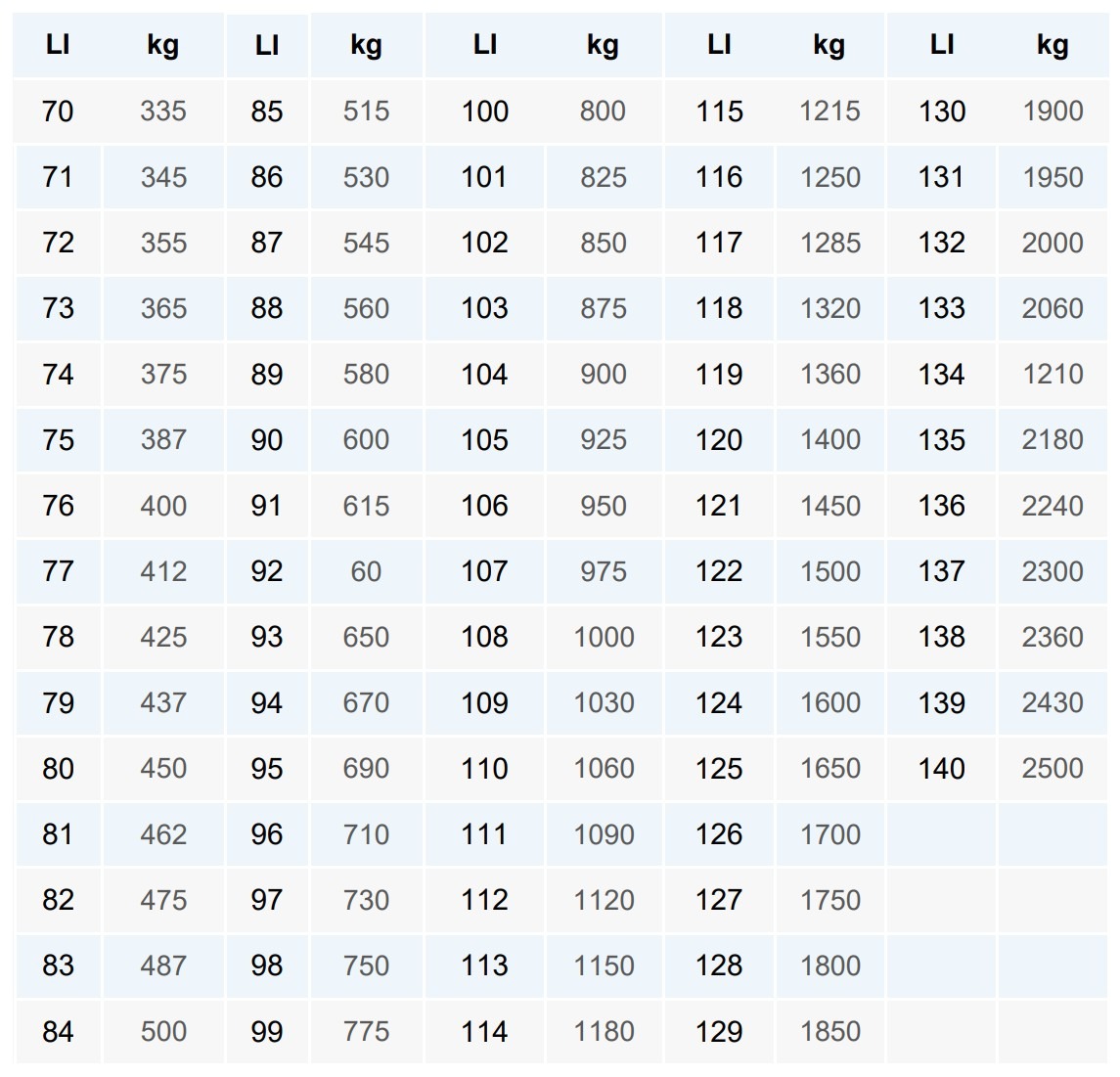
Trailer Tyre Load Index (LI) Chart
The chart below converts Load Index (LI) numbers into kilograms per tyre.
How Do I Check the Load Rating Needed for a Trailer?
Start with the trailer's plated axle weight and specified tyre size. On a conventional single axle with one tyre on each side, each tyre needs enough capacity for its share of the axle load.
For example, a 1,400kg axle requires at least 700kg capacity per tyre. A Load Index of 95 is 690kg, so it is too low, while 96 is 710kg.
This confirms the tyre's load capacity only. The tyre still needs to be the correct size and specification for the trailer.
What Does the Speed Symbol Mean on a Trailer Tyre?
The letter next to the Load Index (LI) is the speed symbol. An N-rated trailer tyre, for example, has a speed category of 140km/h, approximately 87mph. This is a tyre rating, not the legal towing speed.
Trailer Tyre Speed Rating Chart
The chart below shows speed categories commonly used for trailer tyres. The lettering is not in simple alphabetical order, so check the chart rather than estimating from the letter.
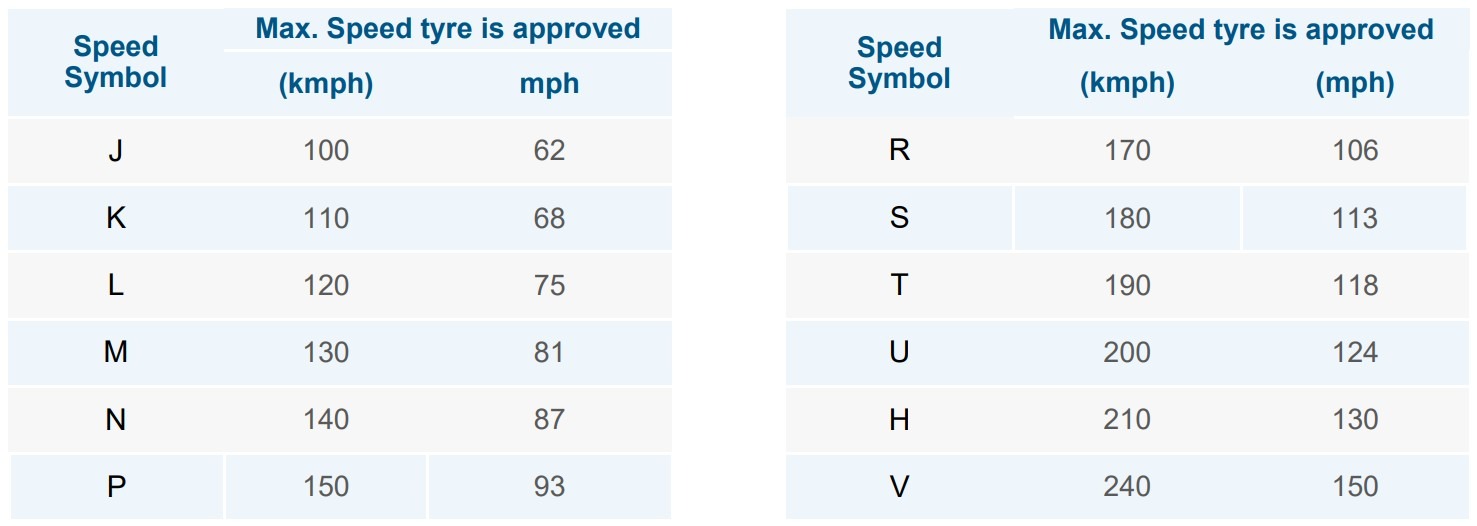
Why are some speed symbols not shown? This chart is focused on the speed symbols specified under UN Regulation No. 54 for trailer tyres. Other tyre standards use additional symbols, including E at 70km/h and higher-speed ratings such as V, W and Y. If a tyre carries a symbol not shown above, check the tyre manufacturer's specification.
Why Might a Trailer Tyre Show Two Load Indices (LI)?
Some tyres show two Load Index (LI) numbers before the speed symbol, for example 98/96P.
- 98 = 750kg in single fitment.
- 96 = 710kg in dual fitment.
- P = 150km/h speed symbol.
Dual fitment does not mean a twin-axle trailer. It means two tyres fitted side-by-side at the same end of an axle. A twin-axle trailer with one wheel at each end of each axle still uses the tyres in single fitment, so the first Load Index (LI) applies. The lower dual rating allows for the fact that two tyres working side-by-side may not share the load perfectly due to differences in pressure, wear or diameter.
What Does 4PR, 6PR or 8PR Mean on a Trailer Tyre?
PR stands for ply rating. Historically this related more directly to the number of reinforcing layers in the tyre casing, but modern materials mean 4PR, 6PR or 8PR should not be read as a literal count of the physical plies. In practical terms, ply rating is an indication of the tyre's strength and load-carrying class.
Within the same tyre size and range, a higher ply rating will commonly be associated with a higher permitted load and may require a higher inflation pressure, but an 8PR tyre does not simply carry twice the load of a 4PR tyre. If a Load Index (LI) or maximum load is stated, use that figure when checking capacity. Ply rating applies to the tyre, not the rim, even when a complete wheel and tyre assembly is described as 4PR, 6PR or 8PR.
Can I Fit a Trailer Tyre With a Higher Load or Speed Rating?
A higher Load Index (LI) or speed symbol may be suitable, but it does not automatically make a tyre interchangeable. The tyre still needs to be the correct size, construction and rim fitment. Do not fit a lower load or speed specification than required by the trailer manufacturer.
Why Does Tyre Pressure Matter to Load Capacity?
A load index is not permission to carry the stated weight at any pressure. Under-inflation increases sidewall flex and heat build-up, which can cause rapid wear and tyre failure. Excessive pressure can also cause problems, so the correct tyre specification and operating pressure still matter.
The maximum pressure moulded into a tyre sidewall should not automatically be treated as the correct everyday inflation pressure for every trailer. L&S stocks tyre depth and pressure gauges for routine trailer tyre checks.
What Other Trailer Tyre Sidewall Markings Are Worth Checking?
Load Index (LI) and speed symbol are only part of the information moulded into a trailer tyre.
- Tyre size identifies the dimensions required for the rim and application.
- R in a size such as 195/55R10 identifies radial construction.
- C is commonly used with commercial or van-type tyre specifications and may appear on some larger trailer tyres.
- PR identifies the ply rating where this system is used.
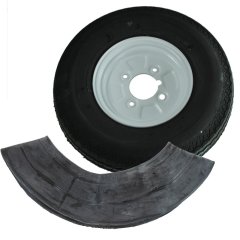
- Tube type or tubeless identifies the intended tyre and rim arrangement. A tubeless tyre is designed to operate without an inner tube when fitted to a suitable tubeless rim.
- M+S identifies a mud and snow designation. It is separate from the Load Index (LI) and speed symbol.
- Date code identifies when the tyre was manufactured. The final four digits indicate the production week and year.
- Maximum load and pressure markings provide additional information about the tyre.
If the tyre markings cannot be read, check the trailer identification plate, manufacturer's handbook or parts information for the specified tyre size and load rating. If those are unavailable, use the trailer make, model, axle rating and wheel dimensions to identify the correct replacement rather than guessing from the damaged tyre.
If you are replacing the complete wheel and tyre assembly, also check the wheel's PCD, number of studs, centre bore, offset and fixing size. Two wheels using the same tyre size can still have different hub fitments.
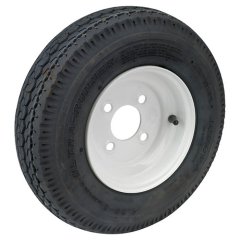
L&S carries complete trailer wheels and tyres in a range of sizes and load ratings.
What Should I Check Before Ordering a Trailer Tyre or Wheel?
- Tyre size
- Load Index (LI) or maximum load
- Speed symbol
- Ply rating where applicable
- Tyre construction
- Trailer axle and gross weight ratings
- Correct inflation pressure
- PCD, stud pattern, centre bore and offset when replacing a complete wheel
If the existing tyre does not match the trailer specification, do not assume it is correct. A previous replacement may have been incorrectly specified.
Need Replacement Trailer Wheels or Tyres?
Browse trailer tyres, complete wheel assemblies and steel rims for plant trailers, utility trailers and general towing applications.
Browse Trailer Wheels & Tyres Open a Trade AccountAlways follow the tyre, wheel, axle and trailer manufacturer's stated load limits, inflation pressures and fitment requirements.