

D-Values, S-Values and Towing Capacity Explained
D-Values, S-Values and Towing Capacity Explained
When choosing tow balls, brackets and couplings, the figures stamped on the component matter more than a simple quoted trailer weight.
A coupling does not have one universal towing capacity in tonnes. The towing vehicle, trailer and mounting all affect the real limit.
D-Value vs S-Value
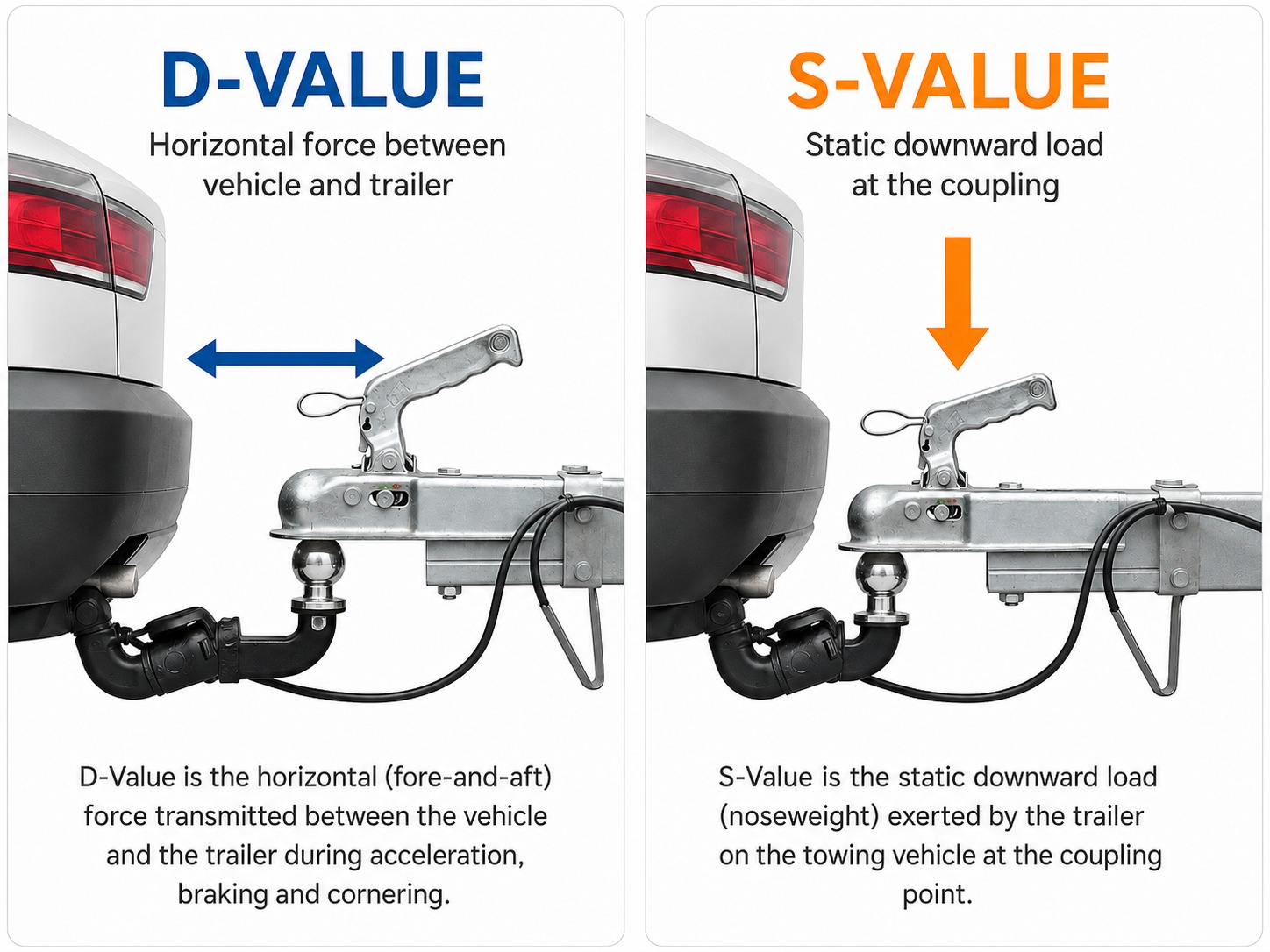
| Rating | Meaning |
|---|---|
| D-value | Horizontal force between the towing vehicle and trailer. |
| S-value | Static downward load on the coupling, usually referred to as noseweight. |
S-value is not trailer weight. An S-value of 350kg does not mean a 3,500kg towing capacity.
Why There Is No Single Tonne Rating
The trailer mass allowed by a D-value changes with the maximum mass of the towing vehicle.
| Vehicle Maximum Mass | Approx. Trailer Mass at D 20.2kN |
|---|---|
| 3.5 tonnes | 5.00 tonnes |
| 7.5 tonnes | 2.84 tonnes |
| 18 tonnes | 2.33 tonnes |
So if a hitch is described as a "3.5 tonne coupling", the important question is: behind what vehicle?
This is why two suppliers can quote different trailer capacities for the same coupling and both figures may be correct if they are based on different towing vehicle weights.
The D-Value Formula
D = 9.81 × T × C ÷ (T + C)
T = towing vehicle maximum mass in tonnes
C = trailer maximum mass in tonnes
D = coupling D-value in kN
You do not normally need to calculate this when ordering. It simply explains why the towing vehicle affects the trailer figure.
What About Dc and V?
Dc is used for the horizontal loading of centre-axle trailers.
V relates to the vertical dynamic loading created as a centre-axle trailer moves over the road.
This is especially relevant to plant trailers and close-coupled twin-axle trailers.
S and V are different. S is a static vertical load. V relates to dynamic vertical loading.
Coupling Classes and Approval Markings
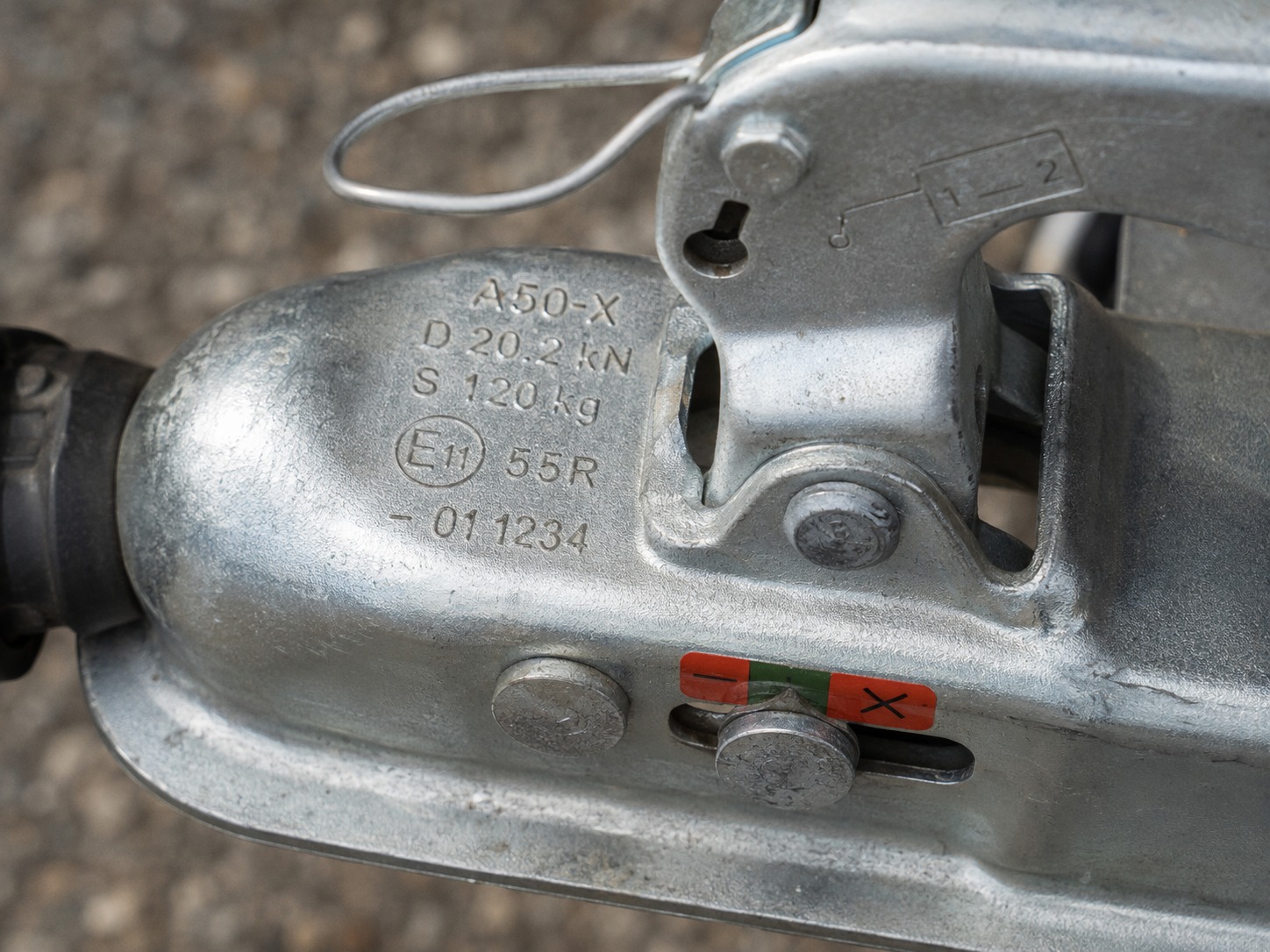
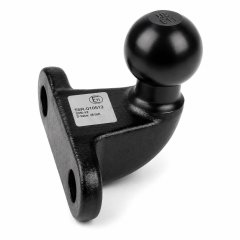
The markings stamped into a coupling can identify its class, approval and load ratings.
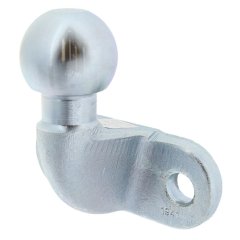
- Class A - coupling balls and towing brackets
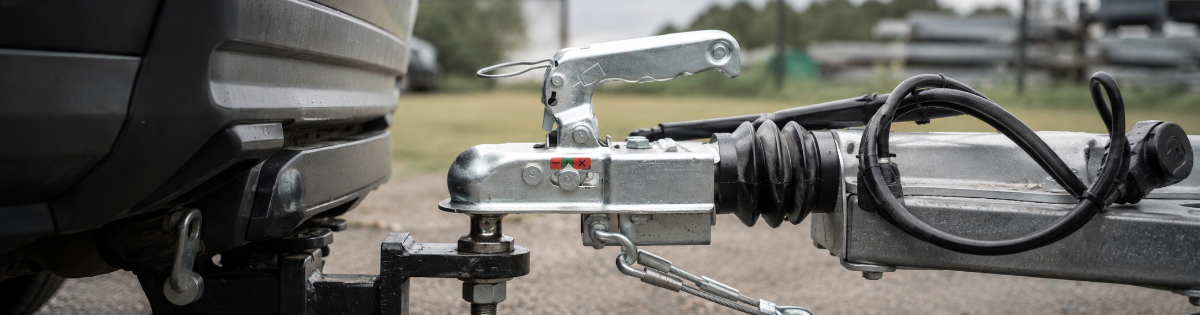
- Class B - trailer coupling heads for 50mm balls
- Class C - drawbar couplings
- Class D - drawbar eyes
Markings such as D 20.2kN and an S-value show the rated horizontal and vertical loads for that component.
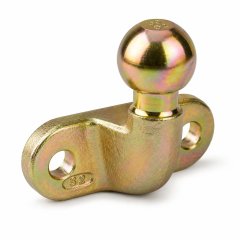
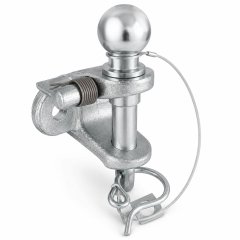
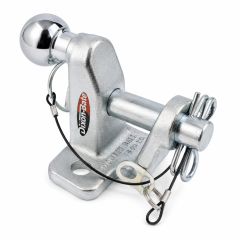
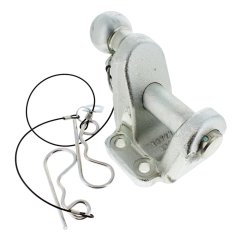
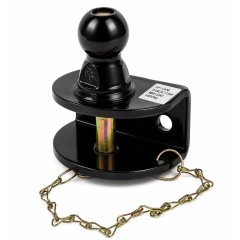
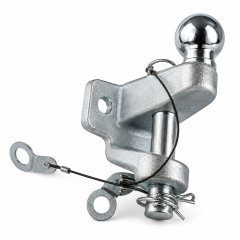
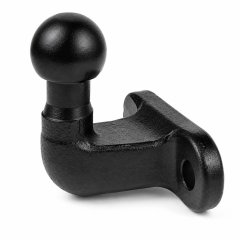
You can browse tow balls and brackets or trailer towing heads and eyes.
The Lowest Rating Wins
Your towing limit is controlled by the lowest applicable rating in the setup:
- Coupling D or Dc rating
- Vehicle towing limit
- Towbar or mounting rating
- Trailer maximum authorised mass
- Noseweight or S-value
- Driver licence entitlement
A stronger tow ball or towing bracket does not increase the rating of the vehicle or trailer.
Road Use and Approval
Check the approval markings and manufacturer specification before using a coupling on the road.
Do not assume an agricultural or off-road hitch is suitable for road use just because it looks heavy-duty.
Always use the bolt grade and tightening torque specified by the coupling, towbar or vehicle manufacturer.
Before You Order
- Check vehicle maximum mass and towing limit.
- Check whether the trailer is braked or unbraked.
- Check whether it is centre-axle.
- Check trailer maximum authorised mass.
- Check noseweight.
- Check towbar rating and fixing centres.
- Check coupling class and approval markings.
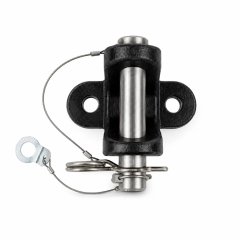
L&S Engineers stocks tow balls and towing brackets, trailer towing heads and eyes, jockey wheels and prop stands, breakaway cables and other transport and towing parts.
Always follow the vehicle, trailer, towbar and coupling manufacturers' stated limits and installation instructions.